Autonomous Agent Architecture Explained: Plan, Act, Remember, Verify

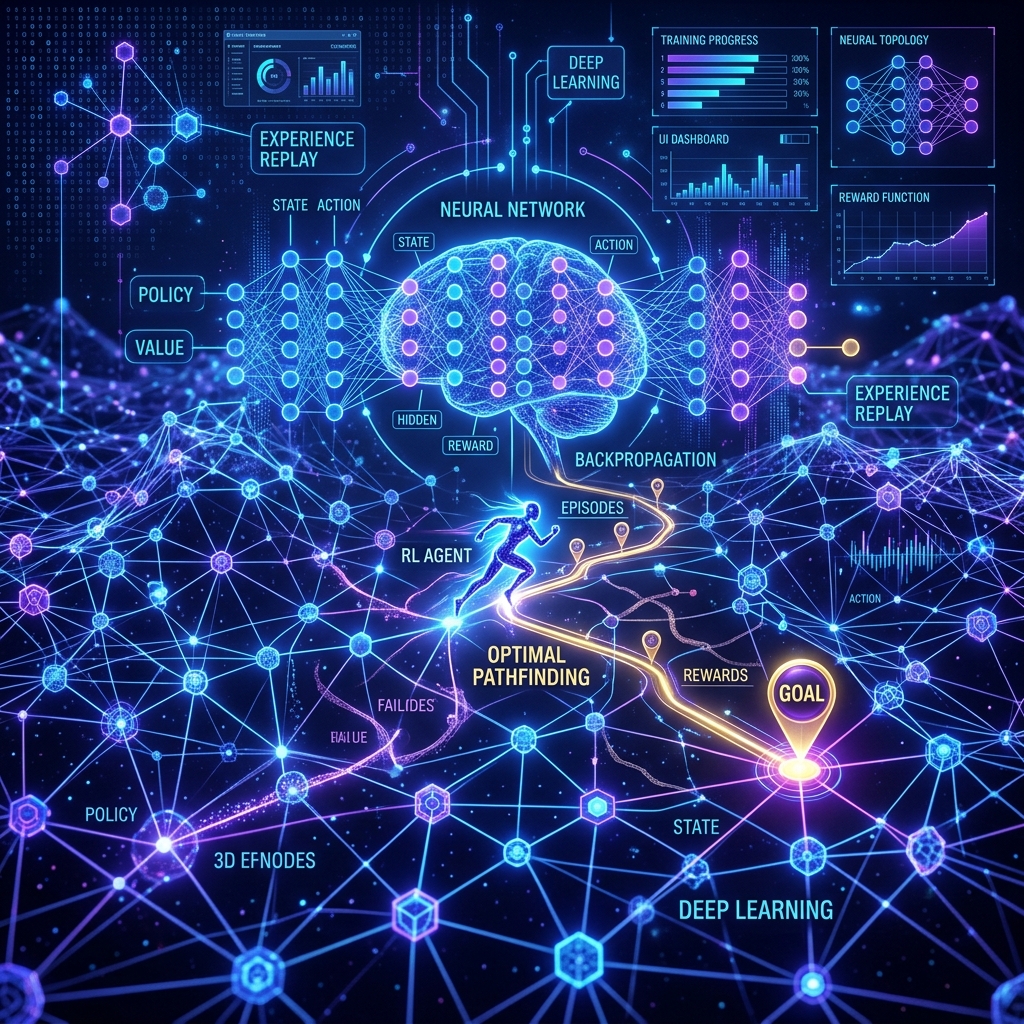
Autonomous agent architecture is a control loop: perceive inputs, plan the next step, call tools, write memory, verify outcomes against success and policy criteria, then either continue, finish, or escalate to a human. Without verification and budgets, “autonomy” is just an unbounded loop that spends money and makes irreversible mistakes.
The loop is often summarized as plan → act → remember → verify. “Act” means tool use with typed interfaces, not free-form text pretending to change systems. “Remember” means durable writes with retention rules, not unlimited context windows. “Verify” is the step most demos skip—and the one that separates production agents from toys.
What Are the Core Components?
Short answer: Planner, tool layer, memory, verifier, and observability.
Perception gathers everything the agent needs for this turn: user message, session history (summarized), retrieved policy chunks, prior tool results, and environment signals (e.g., call state for voice). Keep perception explicit—what went into the prompt should be logged.
Planning decides the next action: which tool to call, what args, or whether to respond directly. Planners can be the same model with a structured output schema or a smaller routing model. Plans should be inspectable JSON, not hidden chain-of-thought you cannot replay.
Tool layer executes allowlisted actions against real systems. Tools must be typed (name, args schema, auth), with timeouts, retries where safe, and idempotency keys for writes. The LLM never “calls an API” via prose—it invokes a registered function your code controls.
Memory spans working context (this session) and durable stores (user prefs, episodic logs). Writable memory needs TTL, PII classification, and clear read paths so the agent does not treat stale facts as gospel.
Verifier checks tool results and draft outputs against task success and policy before the user sees them or before irreversible side effects commit. Verifiers can be rules, smaller models, or human queues for high-risk domains.
Observability ties it together: spans per stage, tool args/responses redacted appropriately, and correlation IDs so support can replay a failed session.
How Does the Plan-Act-Remember-Verify Loop Run?
Short answer: Each turn: perceive → plan → (optional) act → update memory → verify → respond, continue, or escalate—until done or budget exhausted.
- Perceive: assemble context within token and policy limits
- Plan: emit structured next step(s)
- Act: execute tool(s); capture results or errors
- Remember: persist facts that must survive the next turn
- Verify: score outcome vs rubric; block or rewrite if fail
- Decide: user reply, internal continue, or human handoff
Budget counters (steps, cost, wall time) increment every loop iteration. When a budget hits zero, the agent must stop gracefully—summarize state, offer handoff, never spin silently.
Where Do Budgets and Escalation Fit?
Short answer: Budgets cap each loop; escalation is the designed exit when verify fails or risk exceeds threshold.
Typical illustrative budgets for customer-service-style agents:
- ~5–20 tool calls per session
- ~$0.05–$0.50 model + tool cost per resolved task (highly domain-dependent)
- ~30–180 seconds wall time before forced handoff
Escalation triggers: verifier failure after one retry, repeated tool errors, PII or fraud keywords, user request for human, or policy-mandated paths (medical advice, disputed charges). Handoff must include full transcript and tool trace—not “transferring you” with empty context.
Guardrails layer: How to Add Guardrails to AI Agents.
How Does This Architecture Map to Multi-Agent Systems?
Short answer: Each agent runs its own loop; the orchestrator owns verify-and-respond for the user.
In multi-agent setups, workers often run act-heavy loops (tool calls) while a planner runs plan-heavy loops and a verifier runs verify-only passes. The user-facing orchestrator still owns the final verify step before reply. Do not assume workers self-verify—explicit review beats trusting fluent sub-agents.
Multi-agent guide: How to Build a Multi-Agent System.
Where Do Voice Agents Fit?
Short answer: Same loop, plus STT/TTS latency and barge-in as first-class constraints.
Voice adds a real-time pipeline around the core loop: speech-to-text, turn detection, LLM, tools, text-to-speech, with barge-in canceling in-flight TTS when the user speaks again. Latency budgets dominate design—often targeting ~500–900 ms to first useful audio for many flows, with p95 tracked under load.
The plan/act/remember/verify logic does not change; what changes is how often you can afford to loop and how you stream partial responses. Debug pipeline vs logic separately: Debugging Voice Agents.
See also Best Voice AI Agent 2026 · Improve AI Agent Latency.
What Should You Log for Replay?
Short answer: Prompt snapshots (redacted), plan JSON, tool args/results, verifier scores, budgets remaining, and final user-visible output.
When an agent blocks a payment or invents an account number, you need replay without re-running irreversible tools. Store enough state to reconstruct decisions. Pair architecture with production ops: shadow mode, canary, rollback—Production-Ready Agents.
Related
Autonomy hub · Memory & tools · Reduce hallucinations · Enterprise use cases