AI and Remote Patient Monitoring: The Vocal Biomarker

Your voice says more about your health than you think. Learn about the emerging science of vocal biomarkers and how AI is being used to detect health changes—from respiratory issues to neurological decline—through simple speech analysis.
Every time you speak, you are providing a complex data stream that reflects the state of your body and mind. The pitch, rhythm, breathiness, and micro-variations in your voice are influenced by your respiratory system, your vocal cords, and your neurological pathways. "Vocal biomarkers" are specific patterns in this data that can be linked to certain medical conditions. With the power of AI, we can now detect these patterns with incredible sensitivity.
The Science of Sound
Vocal biomarkers are not about *what* you say, but *how* you say it. For example, subtle changes in vocal tremors can be early indicators of Parkinson's disease, often appearing years before physical symptoms. Changes in the "breathiness" or "jitter" of a voice can signal the onset of respiratory conditions like COPD or asthma.
AI models are trained on thousands of voice recordings from both healthy individuals and those with diagnosed conditions. This allows the AI to learn the incredibly subtle "fingerprints" of disease that are invisible to the human ear.
Accuracy in detecting early-stage respiratory distress through vocal analysis
Remote Monitoring at Scale
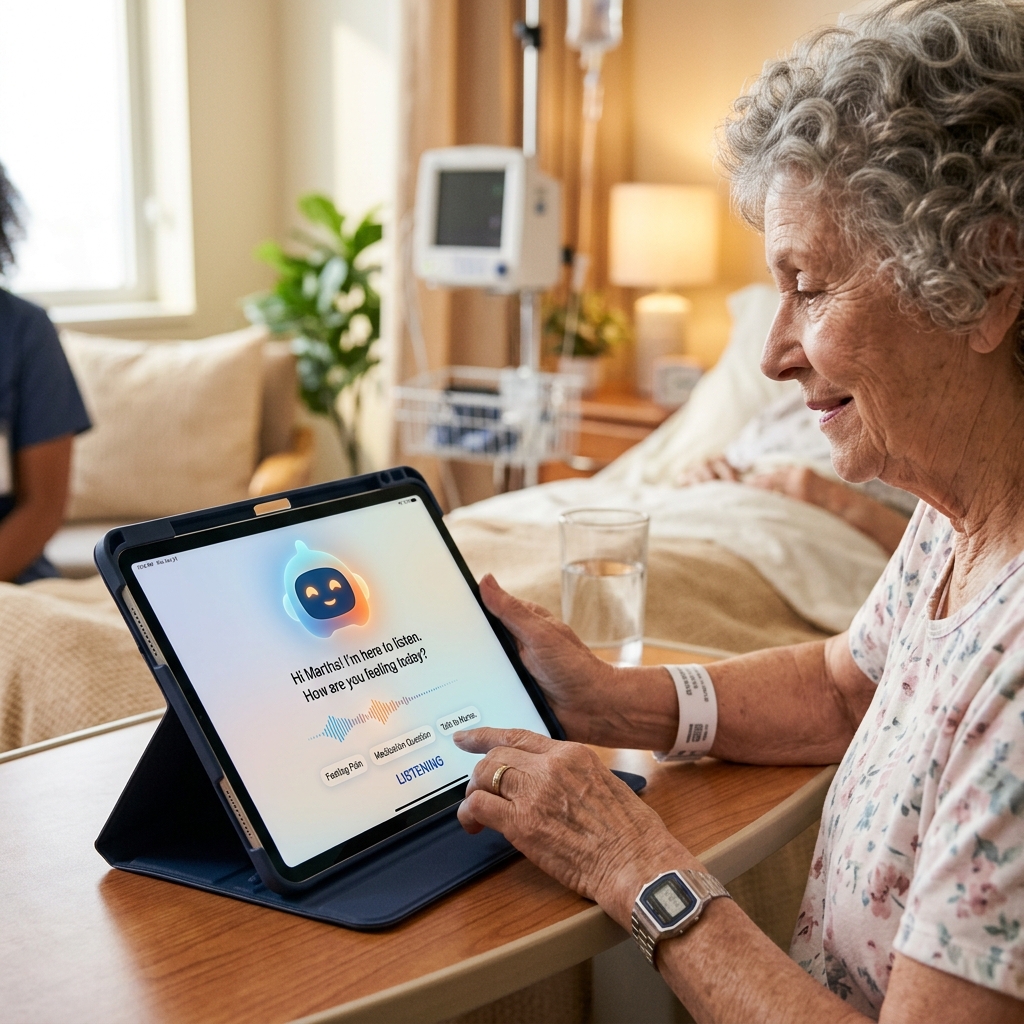
The most exciting application of vocal biomarkers is in remote patient monitoring. Imagine a patient with chronic heart failure who speaks to an AI assistant every morning. The AI isn't just listening to their answers; it's analyzing their vocal patterns for signs of fluid buildup in the lungs (a common and dangerous complication).
This provides a "passive" way to monitor health that requires no special equipment—just a smartphone. It allows for continuous oversight that can catch health shifts before they lead to an emergency room visit.
Mental Health and Stress Detection
Vocal biomarkers are also powerful indicators of mental health. Changes in speech rate, pause length, and tonal variety can signal the deepening of depression or the onset of anxiety. AI-powered voice agents can use this data to provide personalized support or alert a mental health professional when a patient's vocal patterns deviate from their baseline.
"The voice is a window into the body's internal state. AI is the tool that finally allows us to look through that window and provide proactive, personalized care."
The Future: Pre-Symptomatic Screening
In the future, vocal analysis could be part of every routine check-up or even integrated into consumer devices. By identifying the "vocal signature" of health risks long before they manifest as symptoms, we can move toward a truly preventative model of medicine where intervention begins at the earliest possible moment.
The Path to Clinical Validation
While the potential of vocal biomarkers is immense, the path to widespread clinical adoption requires rigorous validation. We are currently in the "evidence-gathering" phase, where large-scale clinical trials are establishing the correlation between specific vocal patterns and clinical diagnoses. This involves not only technical accuracy but also "clinical utility"—proving that using vocal biomarkers actually leads to better patient outcomes or lower healthcare costs.
Regulatory bodies like the FDA are already beginning to define the frameworks for "Voice-as-a-Medical-Device" (VaaMD). This involves setting standards for data quality, algorithmic bias, and patient privacy. As these standards mature, we can expect to see vocal analysis integrated into every major EHR and patient monitoring platform. The voice will move from being a simple communication tool to becoming a core diagnostic vital sign, as fundamental as blood pressure or heart rate.
Looking forward, the combination of vocal biomarkers with other "digital biomarkers"—such as gait analysis from a smartphone or sleep patterns from a wearable—will create a multidimensional view of a patient's health. This "digital phenotype" will allow for a level of precision medicine that was previously unimaginable, catching the earliest whispers of disease before they become a loud cry for help. The future of diagnostics is silent, sensitive, and always listening.
Conclusion
Vocal biomarkers represent a major frontier in healthcare technology. By combining the natural interface of voice with the analytical power of AI, we can create a monitoring system that is non-invasive, scalable, and incredibly accurate. Your voice is a vital sign—and it's time we started listening to what it's really telling us.