Why 88% of Healthcare Appointments Are Still Booked By Phone (And What That Actually Means for AI)

In almost every industry, phone calls have been displaced. You book a flight in an app, order food through a tap, reserve a table in seconds. Yet in healthcare, the phone persists as the dominant channel for something as basic as scheduling an appointment.
That is not a coincidence. It is a structural problem, and it carries a cost that the industry can no longer ignore.
According to Invoca, citing Sequence data, 88% of healthcare appointments are still scheduled by phone. Not because patients prefer it, but because the systems that would replace it simply do not exist in most clinics.
Meanwhile, only 2.4% of appointments are booked online.
The gap between those two numbers is where billions of dollars in operational inefficiency live.
of healthcare appointments still scheduled by phone
lost annually in the US due to missed appointments
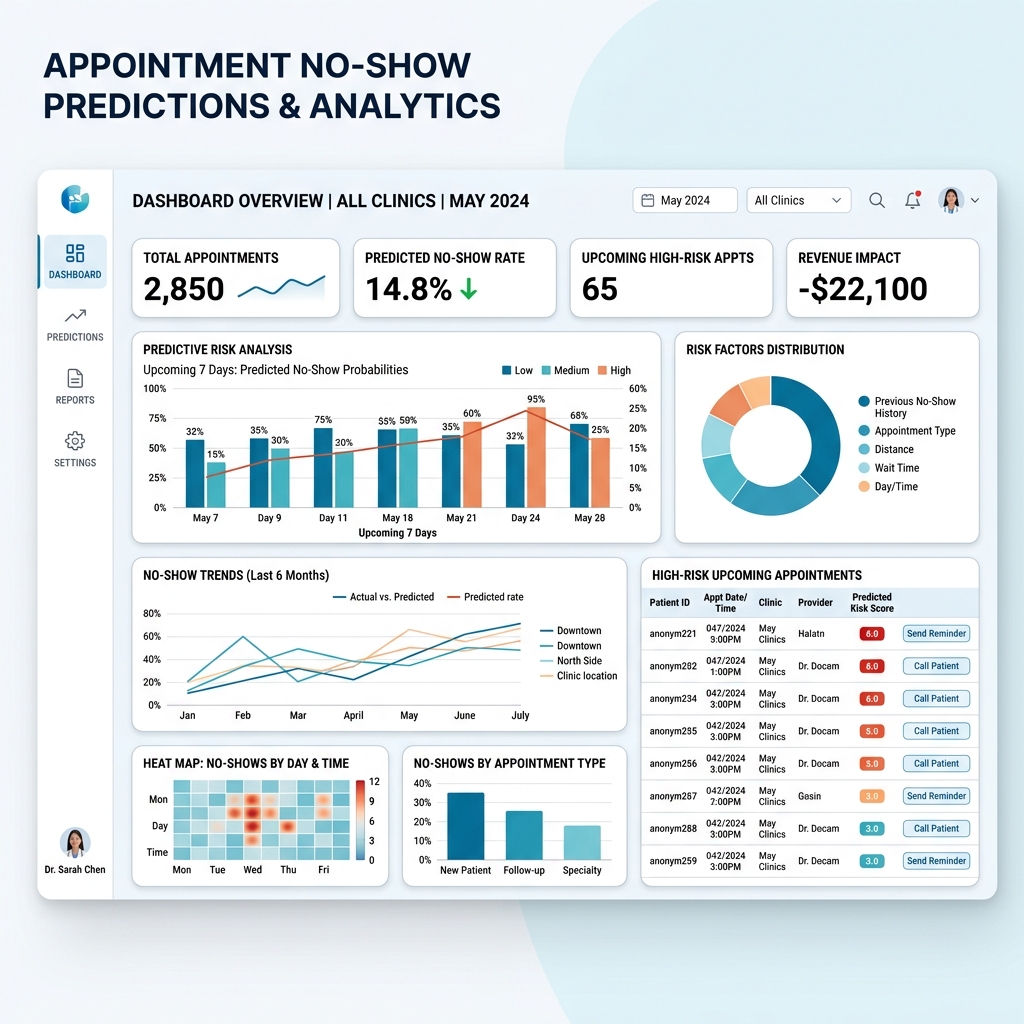
global average no-show rate across practice types
The phone problem is not about preference
Survey data consistently shows patients do not actually want to call.
A Healthgrades and Stax study found that roughly 85% of consumers still schedule by phone, but 80% would prefer a physician who offers online scheduling.
That contradiction points to a supply problem, not a demand one.
Patients are calling because they have no other option that works reliably.
59% of respondents in a scheduling behavior survey said they were frustrated by:
- Hold times
- Limited office hours
- Scheduling delays
Nearly 42% of all appointments are now requested outside standard business hours, meaning clinics that only operate phones during office hours are structurally unavailable for nearly half the demand they generate.
Front-desk staff spend 2–4 hours every day on scheduling calls alone.
That can represent up to half of an employee's working day spent on a repetitive task with no clinical value.
When a patient calls and nobody picks up, the impact is immediate.
CloudTalk found: 60% of patients hang up if the call is not answered within one minute.
For multi-location practices, missed calls can translate directly into lost revenue and patient churn.
Why the phone stuck around in the first place
Healthcare scheduling is not like booking a restaurant. A single patient call can involve:
- Insurance verification
- Provider availability checks
- Visit-type routing
- Pre-authorizations
- EHR updates
Online portals filled part of the gap, but they still struggle with ambiguity. They cannot easily negotiate insurance questions, handle uncertain requests, reroute urgent situations, or support complex workflows.
The phone survived because it offered something no portal could: a human who could handle uncertainty.
"The phone survived because it offered something no portal could: a human who could handle ambiguity. The question now is whether AI has cleared that bar. Based on where the technology stands today, the evidence suggests it has."
The cost side most clinics are not measuring
The often-cited $150 billion no-show cost only captures part of the picture. The broader cost includes:
- Empty appointment slots
- Rescheduling overhead
- Staff burnout
- Lost patients
- Call center turnover
Healthcare contact centers face turnover rates between 45–55%, among the highest of any industry. Average hold times also remain high.
Across health systems: Average patient hold time: 4.4 minutes
A patient waiting on hold does not distinguish between a full schedule and an unanswered phone. The clinic simply appears inaccessible.
average patient hold time
hang up after waiting one minute
of physicians reported burnout symptoms
Where AI voice actually fits
The healthcare AI voice market was valued at $468 million in 2024 and is projected to reach $3.2 billion by 2030. Growth is being driven by measurable operational outcomes.
Healthcare organizations deploying AI voice systems have reported:
- reduced no-shows
- increased appointment volume
- shorter hold times
- improved patient experience
AI voice systems can identify patients, check availability, verify insurance, schedule appointments, send confirmations, and log information into EHR systems—all without requiring staff intervention.
AI reminders alone have reduced no-show rates by 25–40% across practices.
The operational math is straightforward. If a clinic receives 200 calls daily, and 60% are routine scheduling calls, most interactions no longer require human handling.
What VAIU is solving for healthcare providers
VAIU AI builds emotionally intelligent Voice AI agents for clinics and hospitals. The focus is on high-friction workflows:
- appointment scheduling
- medication reminders
- patient feedback
- 24/7 health guidance
VAIU agents are not IVR trees or simple chatbots. They hold real, context-aware conversations.
Key Outcomes
Capabilities include:
- ✓ Appointment scheduling and rescheduling
- ✓ Medication reminders
- ✓ Patient feedback workflows
- ✓ Multilingual support
- ✓ EHR integrations
- ✓ 24/7 patient guidance
VAIU operates with active partnerships across: USA, India, Switzerland, UAE, Africa.
The gap between what patients want and what they have
Research shows: 94% of patients are more likely to choose providers offering online or automated booking.
Over half of millennials and Gen X patients would switch providers if booking options were limited. The demand for alternatives to phone scheduling is becoming a baseline expectation.
Yet adoption remains slow due to EHR complexity, retraining costs, and trust concerns around AI. At the same time, nearly 42% of appointments are booked outside office hours.
Organizations relying solely on phones are increasingly losing demand to competitors offering modern access channels.
The phone itself will not disappear. For complex or sensitive cases, it remains valuable. But for routine scheduling, reminders, and FAQs, there is little operational reason to require a human on every call.
Healthcare organizations are increasingly moving from asking "Should we implement Voice AI?" to "Which Voice AI platform is built specifically for healthcare complexity?"
See VAIU in action
Book a demo at: vaiu.ai