Why 2026 Is the Year Voice AI Finally Went Mainstream
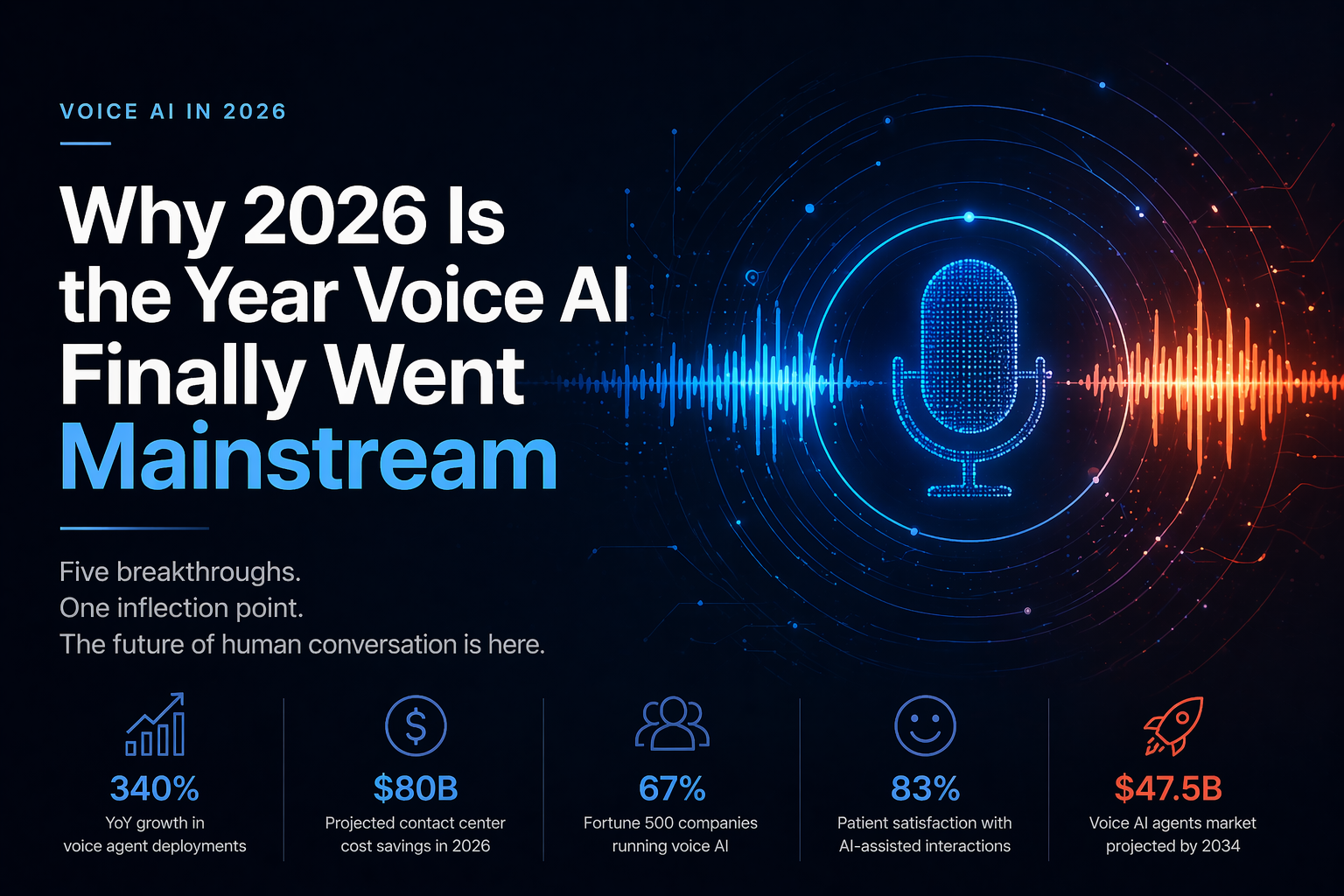
It wasn't one breakthrough. It was five things maturing at exactly the same time. Here's what actually happened, and what it means for anyone building in this space.
People have been saying voice AI is “about to go mainstream” for roughly seven years. Siri launched in 2011. Alexa arrived in 2014. And yet for most of that decade, the honest description of voice AI was: impressive in demos, frustrating in production.
YoY Growth
Labor Savings
Patient Satisfaction
Market by 2034
Five Things That Converged at Once
Voice AI didn't go mainstream because of one breakthrough. It happened because five separate technological conditions matured simultaneously.
1. Latency Finally Hit the Conversation Threshold
Real-time speech systems crossed below 300ms latency, the threshold where conversation begins to feel natural. Research shows that below 500ms, satisfaction is exceptionally high.
2. LLM Inference Costs Collapsed
Running a capable language model behind a voice agent dropped from dollars to cents. Voice AI shifted from an “interesting experiment” to an “obvious business decision” with 391% average 3-year ROI.
3. Voice Quality Crossed the Uncanny Valley
New neural TTS systems produce speech with natural breathing patterns, emotional tone, and pauses. When voice stopped sounding robotic, user trust increased dramatically.
4. Regulated Industries Moved Into Production
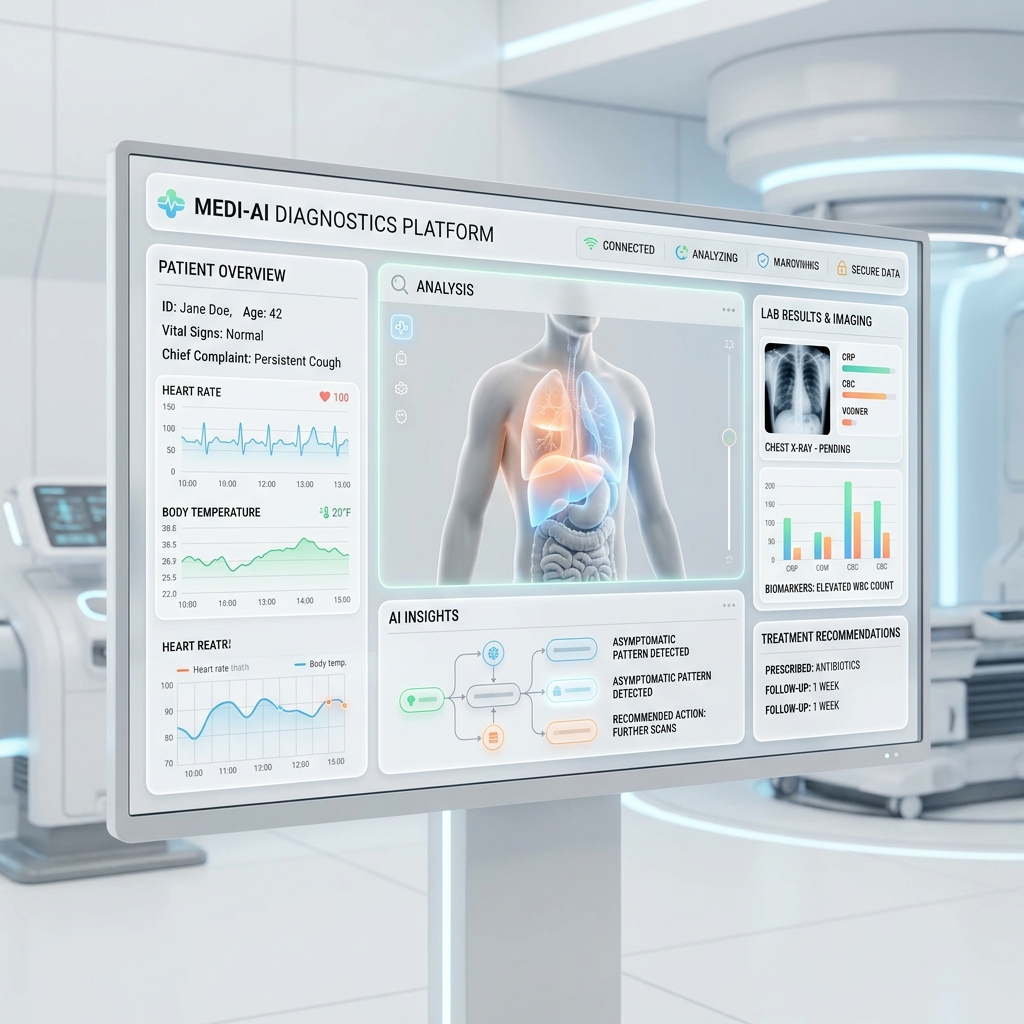
Healthcare systems recovered 30 million clinician minutes through voice AI in 2025. When healthcare and finance move, the rest of the market follows.
5. Orchestration Platforms Matured
Deployment timelines shrank from months to weeks as orchestration platforms removed the need to manually assemble complex multi-vendor stacks.
The Next Frontier: Specialization
Generic voice agents are already commoditized. The real differentiation now is vertical specialization. A healthcare voice agent trained on clinical language performs in a completely different category than a generic bot.
Vertical Voice AI Wins
The winning systems will not be the most generic. They will be the ones deeply specialized for specific industries with:
- ✓ Domain vocabulary accuracy
- ✓ Compliance & Data Sovereignty
- ✓ Workflow integrations
- ✓ Specialized logic
Final Thought
The market is projected to reach $47.5B by 2034. But it won't be won by platforms with the most features; it will be won by companies that understand a specific human workflow deeply enough to replace it entirely.